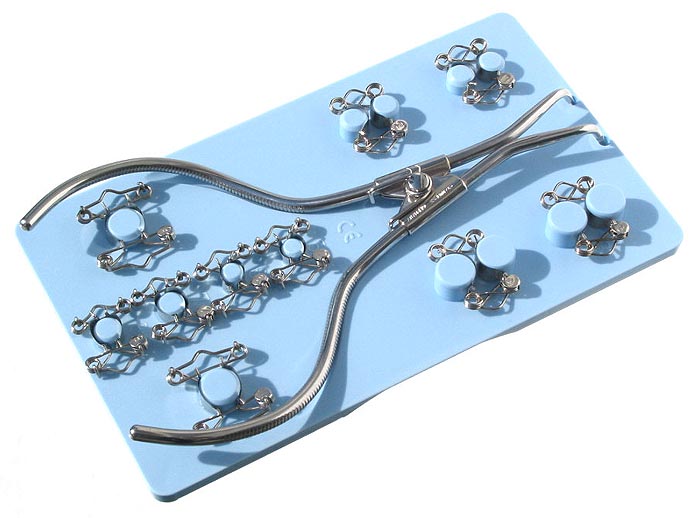
Study on dental matrix systems: The best gingival contour and the band with the least or no overhang were achieved using the Walser matrix system
05/08/2026
Original Article: Assessment of anatomical contacts and contours of class II restorations using four different dental matrix systems: An in vitro comparative analysis.
In summary, the study on the Walser matrix system concludes: The Walser matrix system produced the best gingival contour. The Walser matrix system also exhibited the least or no overhang at the band.
As regards ease of use for the practitioner, the Walser matrix system proved to be less technique-dependent and the most convenient to use. Thanks to the integrated tensioning mechanism of its spring design, which ensures a tight seal in the gingival area, the matrix can be positioned with a high degree of consistency, resulting in virtually no overhang.
Deva Nanda Panda, Mamta Kaushik (1,2), Neha Mehra (1), Neha Verma (1), Aishwarya Dwivedi (3) Self-employed dentist, Poulomi Dental Clinic, Secunderabad, (1) Department of Restorative Dentistry and Endodontics, Army College of Dental Sciences, Secunderabad, (2) Faculty of Humanities and Social Sciences, Birla Institute of Technology and Science, Pilani, Hyderabad Campus, Telangana, (3) Private practising dentist, Dental Bliss, Lucknow, Uttar Pradesh, India
_______________________________________________________________________________________________
Summary
Backround:
An assessment of the restoration of the correct anatomical contour and proximal fit with minimal gingival overhang in a Class II restoration.
Aim:
In this in vitro study, the gingival overhang, contact and contour anatomy achieved with four matrix systems for Class II restorations were evaluated and compared.
Materials and Methods:
Standardised mesio-occlusal, conservative Class II cavities were prepared on two hundred typodont teeth and divided into four groups (n = 50): Tofflemire, U-band system, Palodent V3 matrix system and Walser matrix system. The cavities were restored with composite and assessed qualitatively for the tightness of the approximal contacts. The morphology of the overhang and the contour was assessed using a Medit scanner and Mesh Labs via superimposition.
Statistical analysis used:
The non-parametric Kruskal–Wallis significance test and the Mann–Whitney U test for pairwise comparisons were used.
Results:
A statistically significant difference was observed in the restorations, with the Walser matrix system and the U-band system exhibiting the lowest overhang. No significant difference was found between the groups in terms of contact tightness (P = 0.109). The contours were assessed in the occlusal, middle and cervical thirds. The Walser matrix system produced the best gingival contour (P = 0.000). The Palodent V3 matrix produced the best contour in the middle (P = 0.002) and occlusal (P = 0.036) thirds, with minimal deviation from the optimal contour.
Conclusions:
The Palodent V3 pre-contoured partial matrix system restored the best proximal contour and contact anatomy, whilst the Walser matrix produced only a minimal overhang.
Keywords:
Circumferential matrix system; Class II restorations; Palodent V3 matrix system; segmented matrix system; U-band system; Walser system.
The full study is available for download: ‘Evaluation of the anatomical contacts and contours of Class II restorations using four different dental matrix systems’
Read case studies on the Walser die system by professors and dentists from around the world.